
Part Wraps in Newmarket - Materials, Options and What They're Actually Worth
Choosing a part wrap for your van in Newmarket means picking the right material and finish for the job - here's an honest look at what's available and what the trade-offs are.
What a Part Wrap Actually Is
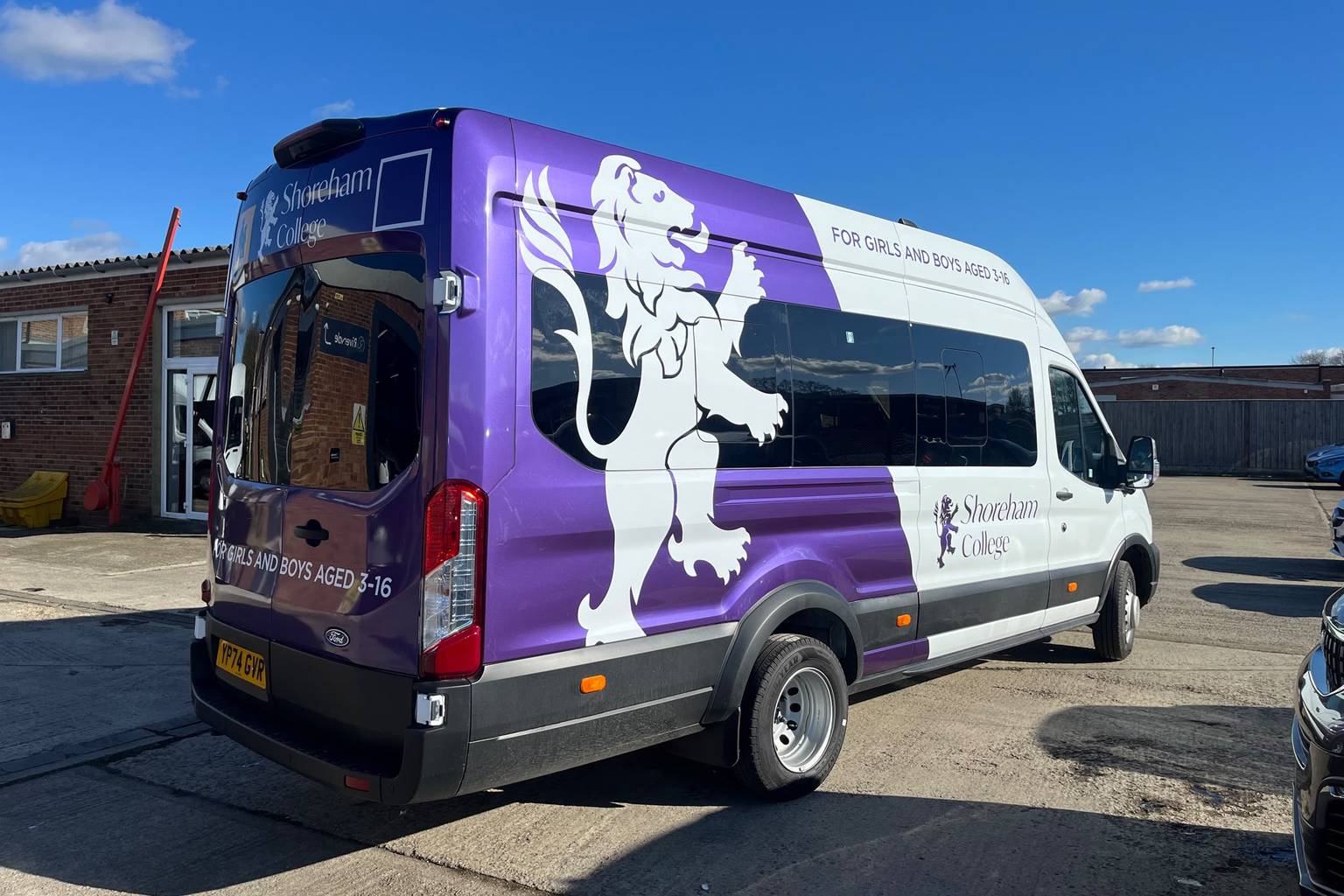
A part wrap means covering specific panels of your van in printed or coloured vinyl rather than wrapping the entire vehicle. The most common panels are rear doors, side doors, bonnets and tailgates. The result is targeted branding - your business name, number and logo on the parts of the van most visible to passing trade, without the outlay of a full wrap.
It's a practical choice for tradespeople and small fleet managers who want a professional look but need to keep costs down or who have a lease vehicle where a full wrap isn't appropriate.
Cast Vinyl vs. Calendered Vinyl - What the Difference Means in Practice
Not all vinyl is the same, and the difference between grades matters more than most people expect.
Calendered vinyl is made by rolling the material flat during manufacture. It's thicker, stiffer and less expensive. On flat panels it performs acceptably, but it doesn't conform well to the curved sections and recesses of a modern van body. Over time, calendered films tend to shrink slightly as they age, which pulls edges away from the surface and leads to lifting and peeling sooner than cast film would. In cold weather it becomes brittle and can crack.
Cast vinyl is manufactured differently - the material is poured and allowed to set in a very thin, flexible sheet. It conforms to curves and contours far better, sits flatter in recesses, and is more dimensionally stable over its lifespan. It's the material used in professional vehicle wrapping and is what we use for part wraps. The upfront cost is higher than calendered, but the difference in longevity and finish quality makes it the better choice for livery that needs to look good for several years.
A common problem with budget part wraps is that the supplier uses calendered material to hit a low price point, and the customer only discovers this when edges start lifting within a year or two.
Finish Options - Gloss, Matt and Satin
Cast vinyl is available in a range of finishes, and the choice affects both appearance and practicality.
- Gloss: The most common choice for van livery. Colours appear vivid and the finish is easy to clean. Shows water marks and light scratches more than other finishes.
- Matt: A flat, non-reflective finish that gives a premium, modern look. Popular for colour-change wraps on prestige vehicles, and increasingly used in van livery for a distinctive appearance. Harder to clean without leaving marks - requires a specific care routine. Not suitable for hand car washes or petrol station jet wash equipment.
- Satin: A mid-point between gloss and matt. Less reflective than gloss, easier to care for than pure matt. A good practical compromise if you want something that stands out from the standard gloss van.
For most trade vans, gloss is the right call. It's the easiest to maintain and the printed colours reproduce most accurately on a gloss laminated surface.
Lamination - Why It Matters for Printed Wraps
Any printed part wrap should have a laminate applied over the print. The laminate protects the printed inks from UV fading, fuel splashes, bird droppings and the general abrasion of daily use. Without it, printed graphics fade noticeably faster and are vulnerable to surface scratching.
Laminate also determines the final finish - you can have a gloss-printed base with a matt or satin overlaminate, which affects the overall look. This gives you more options than simply choosing a base film finish.
Some very budget suppliers skip the laminate to cut costs. Always ask whether the quote includes a laminated print.
Printed Design vs. Cut Vinyl Lettering - Which Is Right for You
Not every part wrap needs to be a full-colour printed panel. For some applications, cut vinyl lettering and shapes remain a practical option.
Cut vinyl lettering suits simple text, phone numbers and basic logos in solid colours. It's applied as individual letters or shapes rather than a printed sheet. The finish is clean and durable. If your branding is straightforward and you want a no-fuss result, cut vinyl is worth considering.
Printed part wraps are the right choice when you need photographic imagery, complex logos, gradients, multiple colours blending together, or a background colour field behind text. The print is produced on a wide-format printer and then laminated before fitting.
Many jobs combine both - a printed background panel with cut vinyl text overlaid, which gives sharp lettering at any viewing distance while keeping the printed background vivid.
Partial Colour-Change Wraps
Not every part wrap is about advertising. Some customers in Newmarket want to change the colour of a bonnet or roof panel - either to give a fleet a consistent appearance when vehicles are different model years with slightly different paint colours, or simply for the look of a two-tone van.
Colour-change films are available in an enormous range of colours and special effects - metallics, brushed finishes, colour-shift films that change appearance in different light. These are applied as a solid-colour film rather than a printed graphic.
Colour-change films on a bonnet or roof also have the practical benefit of protecting the original paintwork underneath, which can be useful on a lease vehicle when you want to return it in good condition. Removal, done correctly, leaves the original paint intact.
Honest Pros and Cons of Part Wraps
- Pro: Lower cost than a full wrap - you pay only for the panels you're covering.
- Pro: Can be targeted at the highest-visibility panels for maximum impact.
- Pro: Works on lease vans where a full wrap might not be appropriate.
- Pro: Removable - original paintwork is protected and can be restored when the van changes hands or the lease ends.
- Con: On a coloured van, partial coverage can look unfinished unless the design accounts for the existing bodywork colour.
- Con: If the existing paint is in poor condition - chips, rust blooms, uneven repairs - it will show through or affect adhesion. The panel needs to be in reasonable condition before vinyl is applied.
- Con: Panel joins and gaps in the design need careful planning at the artwork stage or the finished result can look patchy.
In-House Design, Print and Fitting
We design and print everything in-house, which means the artwork is set up correctly for the specific panels we're fitting. We come to your premises in Newmarket or at a location that suits you - no need to deliver your van anywhere. We also offer wrap removal for existing graphics that need to come off before new vinyl goes on.
If you want to talk through which material or finish is right for your van, call us and we'll give you a straight answer based on what you're trying to achieve and what your budget is.
Working with us in Newmarket
- Design and print both done by us, not sent out.
- Old lettering or wraps removed first, if needed.
- Fleet work in Newmarket split into stages.
- Artwork stored, ready for your next vehicle.
Also available
Other services in Newmarket
Van Wrapping
We design, print and fit full or partial van wraps in Cambridge, working at your premises so your vehicle never leaves your site.
See detailsCommercial Vehicle Wrapping
We wrap commercial vehicles of all types in Cambridge, designing and printing everything in-house and fitting at your site.
See detailsFleet Wrapping and Branding
We brand entire fleets of commercial vehicles in Cambridge with consistent, professionally printed graphics, designing and fitting everything…
See detailsPart Wraps in Newmarket?
Let us know what needs branding and we will send a design and price to look over.