
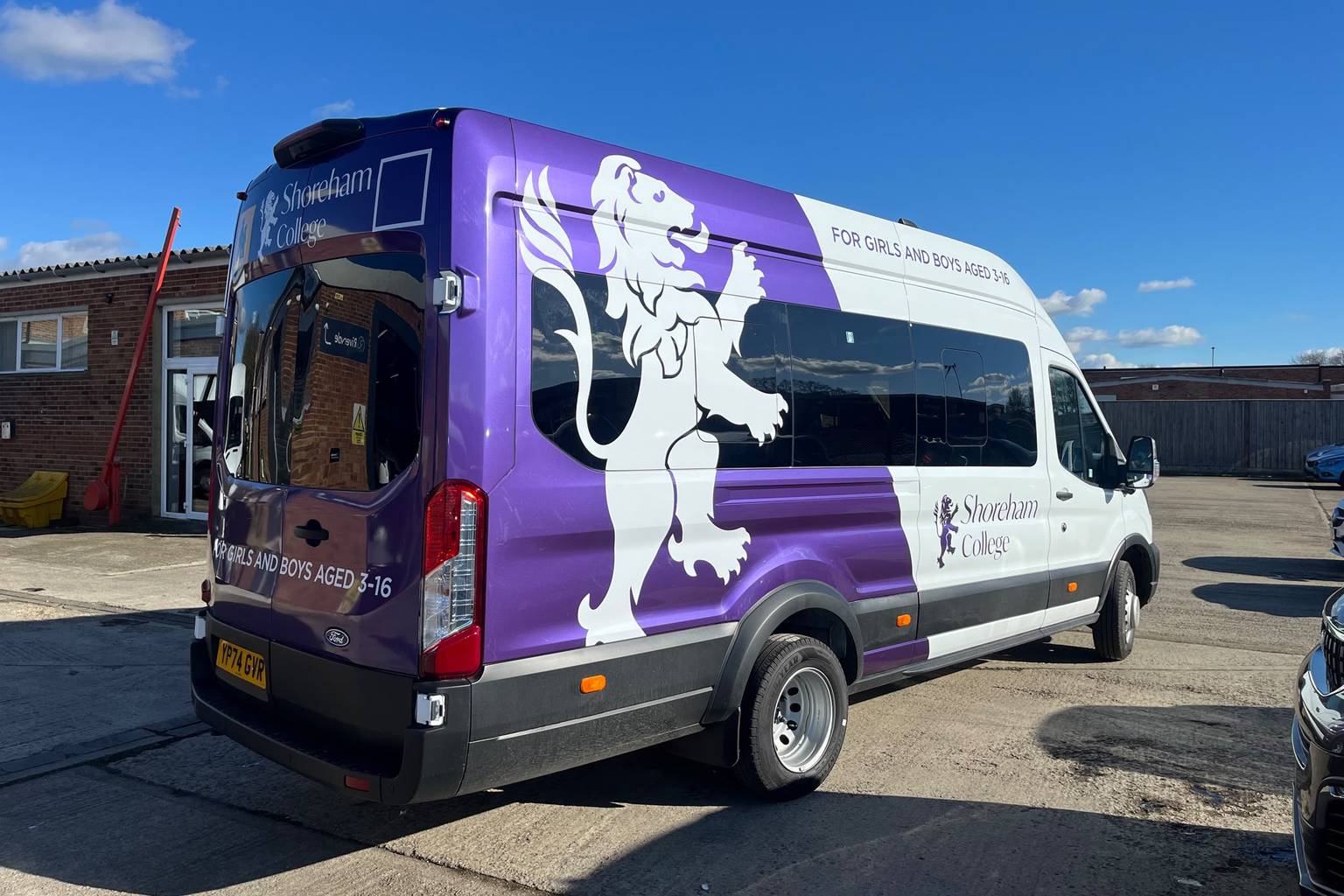
Part Wraps for Vans in Chesterton
Van Wrapping Cambridge supplies and fits part wraps for tradespeople and businesses in Chesterton - designed and printed in-house, fitted at your location.
Part Wraps: What They Are and What They Are Not
A part wrap is vinyl branding applied to one or more panels of your van rather than the whole vehicle. We cut commercial-grade film to fit specific surfaces - rear doors, side panels, cab doors, tailgate or bonnet - print your design directly onto it, laminate it and fit it on-site at your premises.
What a part wrap is not is a cheap substitute for a full wrap. The materials and process are the same. The difference is coverage, not quality. If your budget or your branding brief does not require every panel, a part wrap delivers the same sharp finish on the panels it covers.
The Materials Used in Part Wraps: What You Should Know Before You Buy
The vinyl film used for vehicle wrapping is not all the same, and understanding the basic differences helps you make a better decision and ask better questions of any supplier.
Calendered film is made by rolling molten vinyl through a series of rollers to reach a set thickness. It is less expensive to produce, which makes it common in lower-cost quotes. The drawback is that it retains memory - it wants to return to its flat, pre-application shape. On flat panels this causes no problem, but on curved surfaces, recessed door handles or any panel with compound curves, calendered film will eventually lift at the edges. For short-term flat-panel applications it can be appropriate, but it is generally not the first choice for a van you want to look good for several years.
Cast film is produced by casting liquid vinyl onto a moving belt and curing it. Because it was never under mechanical stress, it has no memory and conforms naturally to complex curves. It is the standard material for professional vehicle wrapping because it stays put, does not stress at edges and holds colour well over time. We use cast or conformable commercial-grade film for all our part wraps.
Laminate goes over the top of the printed film to protect the ink layer. Without lamination, printed graphics are vulnerable to UV fading and to abrasion from cleaning. A gloss laminate gives a bright, vivid finish; a matt laminate reduces glare and gives a more understated, premium look. Both are durable. The choice is largely aesthetic, though a matt finish can be slightly harder to keep clean because it does not wipe as readily as a gloss surface.
Finish Options: Gloss, Matt and Satin
Finish choice affects how your branding looks in different lighting conditions and how the van reads at distance.
- Gloss: High contrast, vivid colours, sharp text. The most common choice for trade vans because it reads clearly in all weather. Shows water marks more than other finishes but wipes clean easily.
- Matt: No surface reflection, slightly softer colour rendering. Popular for more premium or understated brand identities. Shows fingerprints and dried water more visibly than gloss, so it benefits from careful washing.
- Satin: A mid-point between gloss and matt. Reduces glare while retaining reasonable colour vibrancy. Less common but worth considering if you want something slightly different from the standard gloss finish.
For tradespeople in Chesterton who want text and phone numbers to be legible at a distance, gloss or satin generally performs best. Matt works well for logo-heavy designs where legibility at distance is less critical than overall appearance.
Colour: Printed vs Solid Vinyl
There are two ways to get colour onto a van panel: printed graphics and solid-colour vinyl.
Printed graphics allow full-colour reproduction including photographic images, gradients, complex logos and multiple colours in a single panel. The print is done digitally, so there is no minimum colour constraint. We handle all design and printing in-house, which means the colour output is consistent from one job to the next and there is no delay or variation introduced by an external print supplier.
Solid-colour vinyl - a single pre-coloured film in one flat colour - is used where you want a colour change or a block colour panel rather than a printed design. It has a cleaner, slightly different surface texture to printed-and-laminated film. If your brand uses a specific Pantone or RAL colour, we can discuss how closely a solid vinyl can match it, since printed colours and solid colours are produced differently and an exact match is not always achievable.
Honest Pros and Cons of Part Wraps vs the Alternatives
It is worth being straight about where part wraps sit compared to the other options.
- Part wrap vs full wrap: A part wrap costs less and is quicker to apply. A full wrap gives maximum coverage and can change the apparent base colour of the van. If the van's existing colour works with your branding, a part wrap is often the more practical choice. If the paint is poor or the colour actively conflicts with your brand colours, a full wrap makes more sense.
- Part wrap vs magnetic signs: Magnetics are removable and therefore flexible, but they trap grit against the paintwork, can scratch and fade, and fall off at speed. Part wraps are fixed and permanent until removed - they look better and cannot fall off, but they require removal if you sell the van or change your details.
- Part wrap vs cut vinyl lettering: Cut vinyl is single-colour text or simple shapes with no printed background. It is cheaper for simple jobs and works well for basic contact details. Part wraps allow full-colour logos, backgrounds and graphic elements that cut vinyl cannot produce.
- Part wrap vs a new van: This sounds obvious, but some business owners delay getting their van branded because they expect to replace the vehicle soon. A well-applied part wrap is removable, so branding now does not lock you in - you can have the graphics removed when you change vehicles and start fresh on the new one.
Removal: What Happens When You Need to Change
Wrap removal is part of what we offer. When applied correctly to properly prepared paintwork, good-quality vinyl comes away cleanly using heat and appropriate tools without damaging the original paint. Any residual adhesive is then removed with a suitable solvent. The panel is left in its original condition.
Problems with removal usually arise when the underlying paint is in poor condition - old, flaking, poorly keyed respray work or touch-up paint can lift along with the film. It is worth knowing the condition of your van's panels before applying any wrap, because the removal process will reflect whatever was underneath.
If you are having a wrap applied by us in Chesterton and are unsure about panel condition, let us know and we can advise before anything goes on.
The Design and Print Process
Because we design and print in-house, the whole process runs through one team. We use accurate van templates to position your artwork before anything is sent to print, so what you approve on screen translates correctly to the panel size and shape. This matters particularly around door edges, handles and trim details where artwork needs to be positioned deliberately rather than just centred and scaled.
If you have existing brand files - a logo in a vector format, brand colours specified, a preferred font - bring those to us. If you are starting from scratch, we can build a design around what you tell us about your trade and your brand. Either way, you see the design before we print it.
What to Expect on the Day of Fitting
We come to you in Chesterton. The van does not need to go anywhere. The panels are cleaned and degreased on-site before any film is applied. For most part wrap jobs on a standard van, fitting takes between one and three hours depending on the number of panels and complexity of the design. The van is ready to use the same day once the film has fully adhered - we will tell you if there is anything specific to avoid in the first day or two after fitting.
Typical Costs for Part Wraps in Chesterton
Pricing depends on the number of panels, the size of the vehicle and the complexity of the design. A single rear door or tailgate graphic on a medium van typically falls in the range of £150-£350 fitted. A job covering rear doors plus cab doors might run to £500-£800. Photographic or multi-element designs cost more than simple text and logo treatments. These are typical UK market figures - contact us with your van details and what you want it to say for a specific price.
Get a Quote for Your Van in Chesterton
Tell us your van make and model, the panels you want to cover and what information needs to appear. If you have existing brand files, send those across. When you ask any supplier for a price, check whether it covers design, print and fitting, or whether each stage is charged separately. Call us to get started.
Working with us in Chesterton
- Design and print both done by us, not sent out.
- Old lettering or wraps removed first, if needed.
- Fleet work in Chesterton split into stages.
- Artwork stored, ready for your next vehicle.
Also available
Other services in Chesterton
Van Wrapping
We design, print and fit full or partial van wraps in Cambridge, working at your premises so your vehicle never leaves your site.
See detailsCommercial Vehicle Wrapping
We wrap commercial vehicles of all types in Cambridge, designing and printing everything in-house and fitting at your site.
See detailsFleet Wrapping and Branding
We brand entire fleets of commercial vehicles in Cambridge with consistent, professionally printed graphics, designing and fitting everything…
See detailsPart Wraps in Chesterton?
Let us know what needs branding and we will send a design and price to look over.